Today we’re going to zero-in on a few words just at the end of our gospel reading, “they knew he had spoken the parable against them.” But let’s pray first.
Eternal God: send us your Holy Spirit to open our ears to hear your preached Word. Glorify your Word in our hearts and comfort us by it to eternal life — for the sake of Jesus, your Son. Amen.
The king and his advisor
There once was a warrior king who ruled his people doing what was just and right. But one spring day, the king sent his army to defend their borders, and he stayed behind at the palace. One evening, as he was walking on the palace roof, he saw a beautiful woman — the wife of one of his soldiers. He wanted her, so he took her. She became pregnant. To hide his sin, he ordered her husband be sent to the front lines, to where the battle was fiercest, and the husband was murdered.
The king’s advisor found out about the crime and confronted the king. He told the king a story about a rich man with many sheep and cattle, and a poor man with just one little lamb that he hand reared. One day the rich man received a visitor from afar but refrained from slaughtering one of his own livestock for the meal. Instead he stole the only lamb of a poor man, and slaughtered this for the meal. The king was indignant and his anger burned against the rich man. The advisor then dropped the bomb shell: “You are that rich man!” “This story is about you!”
The king of course is King David, and the advisor Nathan the prophet.
As Nathan was telling him the story of the rich man stealing the lamb of the poor man, King David didn’t realise the story was about him. But he entirely has that moment of realisation that the story is about him.
The vineyard and the tenants
Something similar happens in our gospel reading.
The religious leaders are arguing with Jesus. “Who gave you authority to do these things?” they demand. Specifically they mean clearing out the temple which Jesus had performed just a few verses before (Mark 11:15–18). Jesus won’t give a straight answer, but instead tells a story.
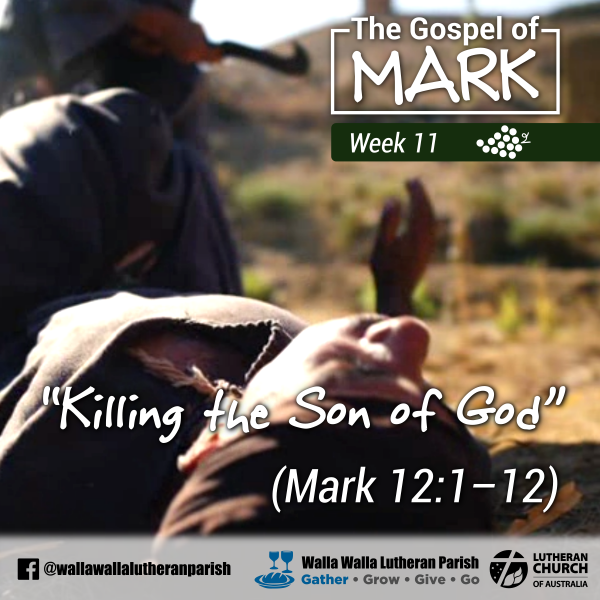
The story is about the owner of a vineyard who comes to collect fruit from the tenants. But the tenants keep beating and killing the messengers. Finally the owner sends his very own son, thinking this might get a different reaction. But the tenants think killing the son will give them the inheritance. They kill the son too, not even giving him a proper burial, just dragging his body away and dumping it outside.
Then the religious leaders get it. The story is about them. God is the owner of the vineyard. They are the tenants. The messengers are the prophets that God had sent to Israel. Jesus is the son whom they will kill.
For both King David and the religious leaders, they realise that they are the characters in the story.
Scripture is about you
Well, guess what? These stories are also about you! The Bible tells stories about you.
Let me say that again: Scripture tells your story. You are the characters that we hear in God’s Word.
This may sound strange. We’re taught from such a young age that the Bible is about Abraham, Moses, Isaac, and Jacob. Isaiah and Jeremiah and John the Baptiser. The disciples, Pilate, and Paul. But the Bible is also about [insert names of congregation members here].
In the Bible we hear of encounters with God by ancient peoples. This happened in their times, and is expressed in their language, ideas, and customs. These encounters are authentic, genuine, and real. Yet as we hear God’s Word we realise that we are on a very similar journey to these ancient people. We recognise ourselves in the stories of their journey.
This can happen because Scripture is God’s Word. When He speaks His Word, His breath, His Holy Spirit, goes out and enters our ears. God is a living God, and His Word is living and active. God’s Word addresses you. God speaks these stories and they become about you.
Can you recognise yourself in this parable of the vineyard and the tenants? Are you like the tenants? Do you at times fail to produce the fruit God desires? Does your life lack love, joy, peace, patience, or kindness, the fruit of the spirit? Have you ignored the messengers that God has sent into your life? Have you ignored His warnings or guidance? Are there times when you want to selfishly keep what belongs to God for yourself? Keep the inheritance just for you? How have you, through your failings, killed the very Son of God?
Scripture is also about God
Thankfully Scripture is not just about you and me. It’s also about God. It’s about what God does for us.
In our reading today we see God acting in various ways.
Firstly we see how caring he is. He lovingly plants the vineyard and wills it to produce good fruit for him. He builds a wall and watchtower to protect it.
Next we see his patience with the tenants. He sends messenger after messenger. We read the story and wonder why the vineyard owner doesn’t just go there and sort out the mess himself. Instead God gives chance after chance, as he sends messenger after messenger. “How many times do you forgive?” God demonstrates the answer for us, “Seventy times seven!”
Finally we see God send his very own beloved Son, Jesus. He knows that we will kill him too, but he has a plan. “The stone that the builders rejected will become the cornerstone.” God turns the rejection and death of Jesus into the cornerstone, the most marvellous thing, the foundation upon which everything is built. God turns Jesus’ death on the cross into victory by laying on him all our sin and guilt and failure. Through the resurrection of Jesus God changes everything.
How will you respond?
So how will you respond to the realisation that Scripture is about you? That through the Bible God is speaking directly to you?
Will you respond like the religious leaders? When they realise Jesus is speaking about them, they look for a way to arrest him. They’re afraid, they don’t believe who Jesus claims to be. In Mark’s gospel fear is the opposite of faith, so being afraid means their hearts are full of unbelief. They continue to selfishly covet the inheritance for themselves.
Or will you respond like King David? When the prophet Nathan confronts him and he realises the story is about him, David responds “I have sinned against the LORD.” (2 Samuel 12:13). And Nathan speaks God’s loving kindness in reply, “The LORD has taken away your sin. You are not going to die.” (2 Samuel 2:13–14).
So my challenge to you this week is to open your Bible to hear God’s Word. Try and do this at least a few times this week. And as you read I encourage you to find yourself in the story. May you realise the Bible is telling your story. Then see what the living and active God says and does in your story today.
Take for an example what we did at our Lenten Bible study last Wednesday night (28th Feb). We read together the story of Jesus walking on the water at the end of Mark chapter 6. Jesus sees the disciples “straining at the oars” against the wind and the waves. We saw ourselves in the disciples straining at the oars. God invited us to embody this by bringing to mind a situation that we’re struggling with at the moment, like the disciples struggling against the wind. We turned the back pew of Zion church into a boat, and we strained at the oars (wooden brooms). We then let Jesus come into the boat with us and released our tight grip on the oars, giving our situation over to Jesus.
Blessing
May you realise that Scripture is about you, even the difficult bits where we perpetrate the killing of the Son of God. But may you hear that God is loving and caring and patient. He turns the murder of his Son into the most marvellous deed in the entire history of earth. Through this miracle may you bear good fruit for God’s kingdom, and in doing so receive the inheritance that Jesus has won for you. Amen.