Searching for Jesus
There’s story of a man who put up Christmas lights and a nativity scene in his front yard. But one night, some thieves came and stole his baby Jesus. They left Mary and Joseph, the shepherds and sheep, but took Jesus. This man was distressed. He put out a plea on social media, and it even made it into the newspaper. He was quoted saying, “Do you know where my Jesus is? Please return Him to me.”[1]
Where is Jesus?
In our gospel reading, Mary and Joseph have lost Jesus. They have made their annual pilgrimage to Jerusalem from Nazareth for the Passover festival, celebrating their people’s rescue from Egypt. After the celebrations, the twelve year old Jesus stays behind in the city. But his parents continue on the return journey, thinking Jesus is among their caravan. After a day they look for him, but soon realize Jesus isn’t travelling with them. They’ve lost Jesus! “Do you know where my Jesus is”?
They go back to look in the city. Can you imagine how anxious they would be searching for him? It takes another three days of searching before they find him. He’s been in the temple courts the whole time. The story goes that he’s ‘sitting among the teachers,’ as if he’s an equal with the rabbis and scribes. He’s listening to them, and questioning them. Everyone is amazed and astonished, Mary and Joseph relieved.
Then we have this strange exchange between mother and son. This exchange is at the heart of the story. “Boy, why have you treated us like this!? Why did you not obey us and come home? Your father and I have been searching anxiously for you!” Then Jesus asked, “Why were you searching for me? Didn’t you know I had to be in my Father’s house?”
And here’s our problem: Jesus seems to have two fathers. There’s Joseph (his earthly father, whose house is in Nazareth) and then there’s God (his heavenly Father, whose house is the temple). Jesus is a human, so his earthly father desires that Jesus to obey him (‘Honour your father and mother’). But Jesus is also God, so his heavenly Father desires that Jesus obey him.
Searching for Jesus in the wrong places
Having two fathers creates tension. This tension means that Mary and Joseph search for the missing Jesus in the wrong places. They expect Jesus to return with them from the festival, but the will of Jesus’ heavenly Father means that he “had to be” in the temple.
When we forget that Jesus is both human and God, we too can end up seeking Jesus in the wrong places:
(a) If we over-emphasize the earthly/human aspect of Jesus, we tend to see him only as a great teacher. This story becomes a moral example: to grow in our faith we need to sit down among the teachers like Jesus, we need to listen and ask questions like Jesus. Over-emphasizing his human nature reduces being a Christian to acting like Jesus.
(b) If we over-emphasize the heavenly/divine aspect of Jesus, we tend to reach for the heavens. We conclude that in order to be near to God we must spend more time in our “Father’s house.” We might resolve to spend more time in prayer, more time at church, more time being with our heavenly Father. Over-emphasizing the divine nature of Jesus can reduce Christianity to doing things that will us allow us to ascend to God in heaven.
Both Son of man and son of God
These things aren’t bad. It’s not bad to listen to teachers and question them in order to grow in our faith. It’s not bad to resolve to spend more time dwelling in our Father’s house. This might be a good goal for 2019. But these things miss the point.
The point is that God can be found here on earth in Jesus. Mary and Joseph anxiously search for their son, and they’re surprised to find him in the temple. Yet they do find him. And their search reveals something new about Jesus — he has two fathers. Jesus is both human and God, with both an earthly and heavenly Father. Jesus is son of man and son of God.
Where do we find Jesus?
This is the point of Christmas: God comes to you as a human. At Christmas, the divine enters the creation so that he may be found! God is with us here on earth.
It’s easy to miss the significance of Jesus being both man and God. In Jesus, God becomes human. God takes all of our humanity into himself. He takes our sin, brokenness, pain, hurt, neediness. By becoming human and having an earthly father, Jesus assumes the whole of humanity. But it also works in the opposite direction! In Jesus, humanity becomes divine. God gives all of his divinity to you. He gives you his righteousness, glory, eternal life. This is often called the ‘happy exchange’ or ‘joyous exchange.’ I’ve heard it said like this, “He became what we are, so we could become who He is.”
It’s like a teenager coming home for the weekend. They give Mum a bag of dirty laundry, and in return Mum gives them a bag of clean laundry. The exchange only happens because Mum knows how to do the laundry, and only Mum will take the dirty laundry.
This can sound very abstract, but it’s applicable to our daily life. Because Jesus is both man and God, because he has two fathers, he is able to be with us in two important ways:
(1) Corporate worship. Mary and Joseph found Jesus in his Father’s house — the temple. Through your baptism, you too are made God’s child and invited into your Father’s house — the church on earth. As we gather in our Father’s house, Jesus is here with us. God can be found here on earth. Right now, in this room, God is with us through Jesus. We experience this in a very real way in Holy Communion. The divine is infused in/with/under the earthly elements (bread and wine). I found this painting which depicts what I mean.[2]
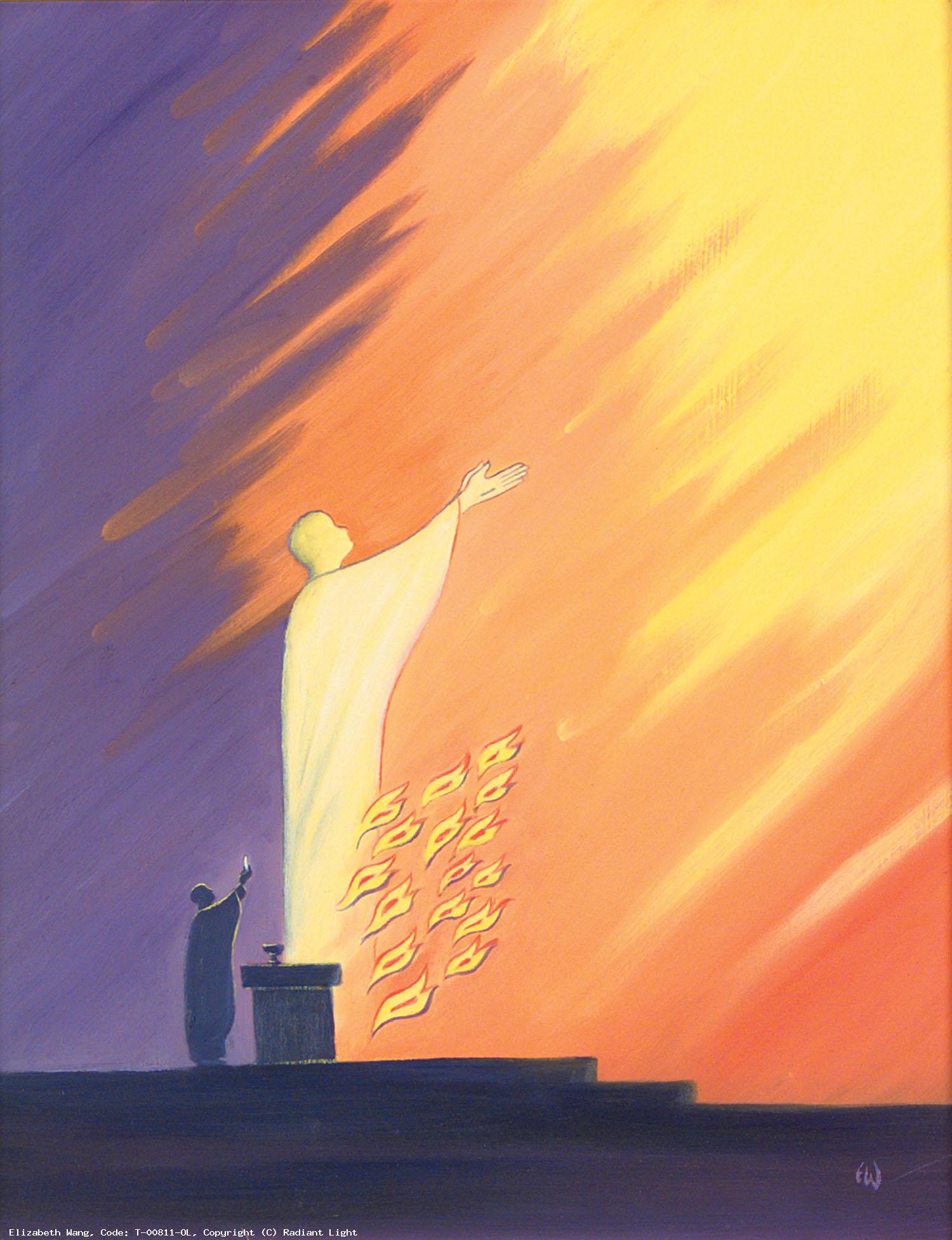
(2) Suffering. Holy Communion does not only bring you into fellowship with Christ, but with all the saints. We are united as one body. But this has implications. ‘If one part suffers, every part suffers with it’ (1 Corinthians 12:26). We share our own sufferings and struggles with each other as one body (you, me, all the saints, and Jesus). But as one body we take all the suffering of our members into the crucified body of Jesus, and there it dies. The body is raised to new life, meaning all our suffering is glorified. Our dirty laundry is swapped for white! Because Jesus is both human and God, we have hope in our suffering.
They did not understand
Jesus tries to explain this to his earthly parents. He says, “Didn’t you know I had to be in my Father’s house?” But they did not understand what he was saying to them (Luke 2:50). Like Mary and Joseph, sometimes (often?) we don’t understand this both man and God business. So let’s take a leaf out of Mary’s book and simply treasure these things in our hearts. May you treasure this joyous exchange in your heart. May you find God here on earth in Jesus — son of man and Son of God. May you grow wise and strong as God’s child, as you continue to meet with God in your Father’s house. Amen.
[1] https://www.oneplace.com/ministries/a-new-beginning/read/articles/search-for-jesus-8737.html
[2] http://radiantlight.org.uk/images/image/137?gallery=14